The Myth That AI Kills Jobs (And the Reality It’s Creating)
For years, the prevailing narrative has been simple: artificial intelligence is coming for human jobs. Articles warn that algorithms will replace accountants, paralegals, customer service agents, and even mid‑level managers. The headline is almost always the same: “AI is coming for your job.”
But there’s another story unfolding beneath the surface—one that doesn’t get as much attention. While AI is reshaping many white‑collar roles, it is also creating a quiet boom in the skilled trades: electricians, plumbers, HVAC technicians, and other infrastructure workers are more in demand than ever—not despite AI, but because of it.
The AI‑driven explosion of data centers, cooling systems, and energy infrastructure is turning these hands‑on trades into high‑value, “AI‑adjacent” careers rather than obsolete ones.
Why Electricians and Plumbers Are “AI‑Proof”
First, it’s important to understand why AI struggles to replace these trades.
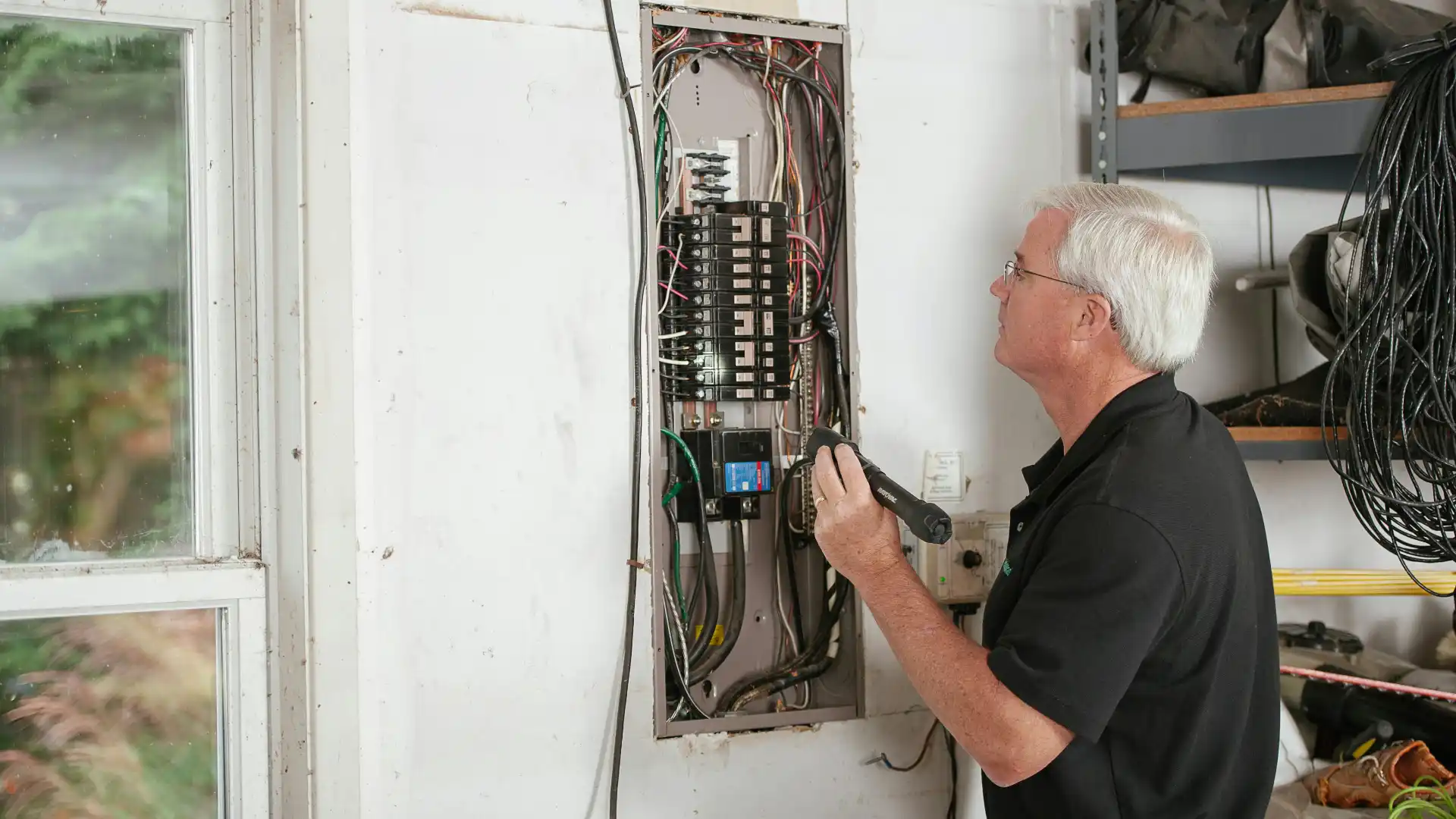
Unlike data entry or document processing, electrical work and plumbing are deeply physical, contextual, and judgment‑heavy. An electrician doesn’t just flip a switch; they read a building’s wiring like a detective, diagnosing faults, balancing loads, and adapting to quirks that no blueprint fully captures. Plumbers and HVAC technicians work in similar environments—tight, dusty, and unpredictable—where every job is slightly different.
Automation simply isn’t good enough yet to replace the combination of manual dexterity, spatial reasoning, and on‑the‑fly decision‑making required in these trades. Robots can’t yet climb into a cramped crawlspace, trace a leak through a maze of pipes, or rewire a panel in a 100‑year‑old building. Even sophisticated AI tools can at best assist, not replace, the human technician.
This is why many experts now describe skilled trades as “AI‑adjacent” rather than “AI‑safe.” AI isn’t coming for their jobs; it’s becoming a partner that helps them work faster, smarter, and safer.
How AI Is Already Helping Skilled Trades
AI isn’t just a threat to office workers—it’s also quietly invading the workshop and the job site. Here are a few ways tradespeople are already using AI‑assisted tools:
- Predictive maintenance tools: AI analyzes patterns in equipment performance to predict when a motor, chiller, or transformer will fail, allowing technicians to fix problems before they cause downtime.
- Augmented reality (AR) manuals: Some electricians and HVAC technicians use AR glasses or tablets that overlay wiring diagrams and schematics onto a system, reducing the chance of errors.
- Scheduling and work‑order optimization: AI‑driven platforms assign tasks, route trucks, and optimize timelines, freeing up technicians to focus on the actual work rather than paperwork.
- Design and simulation software: Plumbers and HVAC specialists use AI‑powered design tools to model complex piping and cooling systems, helping them avoid costly mistakes before they drill a single hole.
These tools don’t replace workers—they augment them. The result is a workforce that is more efficient, more precise, and more valuable, not obsolete.
The AI Data‑Center Boom: A New Gold Rush for Electricians and Plumbers
The most visible driver of this trend is the AI data‑center boom. Every AI application, from large language models to autonomous driving systems, runs on vast server farms. These data centers are energy‑hungry, power‑intensive, and hyper‑cooled environments that would collapse without the help of skilled trades.
Here’s what that means in practice:
- Electrical work is the backbone of data centers. In many new AI‑ready facilities, electrical systems account for up to 45–70% of total construction costs. These systems must handle enormous power loads, with redundant circuits, advanced switchgear, and backup power systems.
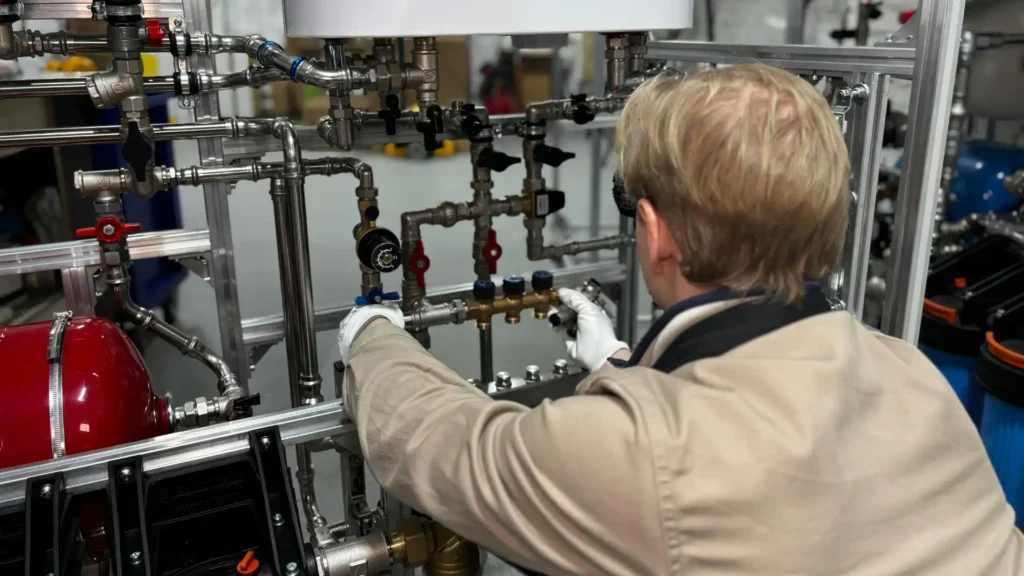
- Plumbing and HVAC are just as critical. AI data centers generate so much heat that liquid cooling and advanced refrigeration systems are now standard. These systems require complex piping, chillers, and heat exchangers—precisely the kind of work that plumbers and HVAC technicians specialize in.
- Retrofitting is a recurring business. Many older data centers are being retrofitted to handle AI‑grade workloads, which means re‑wiring, re‑plumbing, and re‑cooling—all of which require skilled tradespeople.
As AI continues to grow, the world will need thousands of new data centers. That’s not speculative—it’s already happening. The United States alone is projected to need hundreds of thousands of new electricians in the next decade to keep up with demand, with many of those jobs tied to AI‑driven infrastructure projects.
Labor Shortage and Higher Wages: Labor Shortage
The AI infrastructure boom is colliding with a growing labor shortage in the trades, creating a classic supply‑and‑demand situation: demand is up, supply is down, and wages are rising.
For years, the emphasis on college degrees and “white‑collar” careers has led many young people to overlook the trades. But as AI‑driven projects take off, the reality is becoming clear: there simply aren’t enough electricians and plumbers to keep up.
The result is higher wages, better benefits, and more job security. In many regions, data‑center‑related electrical and plumbing work now pays premium rates, with overtime and long‑term contracts. Plumbers and HVAC technicians working on AI‑ready data centers report steady demand and long‑term projects, not short‑term gigs.
This is a major shift from the narrative that AI is only a threat to human labor. The reality is that AI is creating a new kind of blue‑collar boom, where skilled tradespeople are not just “saving the day,” they’re powering the future of technology.
Case Studies: AI Infrastructure in Action
Stories from the front lines help illustrate this trend:
- In San Diego, electricians are seeing a surge in projects tied to AI data centers and renewable‑energy storage. Training programs are now framing AI as a source of more work, not less.
- In rural areas, data‑center construction projects are creating new career opportunities for electricians and plumbers who might otherwise have to commute long distances or leave their communities.
- In urban centers, plumbing and pipe‑fitting associations describe data‑center projects as “highly desirable” work because of their scale, pay, and exposure to cutting‑edge technology.
These examples show that AI isn’t just a theoretical trend—it’s reshaping the labor market on the ground, creating new opportunities for skilled tradespeople.
The Broader Thesis: AI Is Creating a New Infrastructure Economy
The AI data‑center boom is just one piece of a larger picture. AI is also driving demand for 5G and 6G towers, edge‑computing hubs, EV‑charging networks, and renewable‑energy infrastructure. All of these systems require electricians, plumbers, HVAC technicians, and industrial automation specialists to build, maintain, and upgrade.
This is a new infrastructure economy—one where the physical world is being retrofitted to support the digital future. The result is that “AI‑safe” careers may be less about avoiding technology and more about embracing it.
Counterarguments and Nuance
Of course, this story isn’t entirely straightforward. Not all construction or manual work is safe from automation. Repetitive, low‑skill tasks are more vulnerable to robots and AI. And some jobs within the trades will be automated: basic drilling, lifting, or inspection tasks may be handled by robots, but the human oversight and complex problem‑solving will remain essential.
Additionally, training and upskilling are still critical. Tradespeople who learn to work with AI tools, smart sensors, and digital schematics will be far more competitive than those who resist change.
Practical Takeaways for Readers
So, what does this mean for workers, students, and policymakers?
- For students and young workers: Skilled trades linked to AI infrastructure (electrician, HVAC, plumbing, industrial automation) are likely to be more stable and better‑paid than many desk‑based roles.
- For policymakers: There’s a growing need to expand vocational training, apprenticeships, and “AI‑infrastructure” curricula that blend trades with digital skills.
- For trades professionals: Learning how to integrate AI‑assisted tools into your workflow can turn you into a high‑value, AI‑ready specialist—someone who can command premium pay and long‑term contracts.
Conclusion
The narrative that “AI is coming for your job” is incomplete. Yes, AI is reshaping many white‑collar roles. But it’s also creating a new kind of labor market—one where electricians, plumbers, and other tradespeople are not just surviving, they’re thriving.
The AI data‑center boom is turning the physical world into a high‑tech battlefield, and the people who know how to wire, plumb, and cool these systems are the ones who will power the future. In this new world, the most “AI‑safe” careers may be the ones that are the most hands‑on, not the most “digital.”